"My signature was on the banknotes. I know what this technology can do. And what the banks have been hiding is indefensible." Robert Peston's six-month investigation — and the interview with Andrew Bailey that four banks tried to stop
-
Published
Three days before the film went out, solicitors acting for four of the five biggest high street banks wrote to the BBC and demanded it be withdrawn. The BBC said no. Andrew Bailey — governor of the Bank of England, former chief executive of the FCA, and, years earlier, the Chief Cashier whose name sat on the currency — then agreed to speak, on the record, at length. Within three days, more than 40,000 people had signed up.
Last night on News at Ten
Within minutes of News at Ten coming off air last night, the banks put out a statement denying the claims made in the film.
It was too late. More than 40,000 people had already signed up.
Last night's News at Ten was an uncomfortable watch. Across the desk: Robert Peston, who as the BBC's business editor told the country Northern Rock had gone to the Bank of England for support — before the banks wanted anyone to know. Opposite him: Andrew Bailey, governor of the Bank of England, former chief executive of the Financial Conduct Authority, 40 years in and around Threadneedle Street. At 67, he had decided he would not keep quiet about what high street banks have been keeping from ordinary savers.
Bailey had turned down this interview for two years. When Peston put the BBC's evidence in front of him, he said: "It's time. I can't keep quiet any longer." He would talk, he said, on one condition: "Put it all out, Robert. Don't tidy it up."
The interview, in full
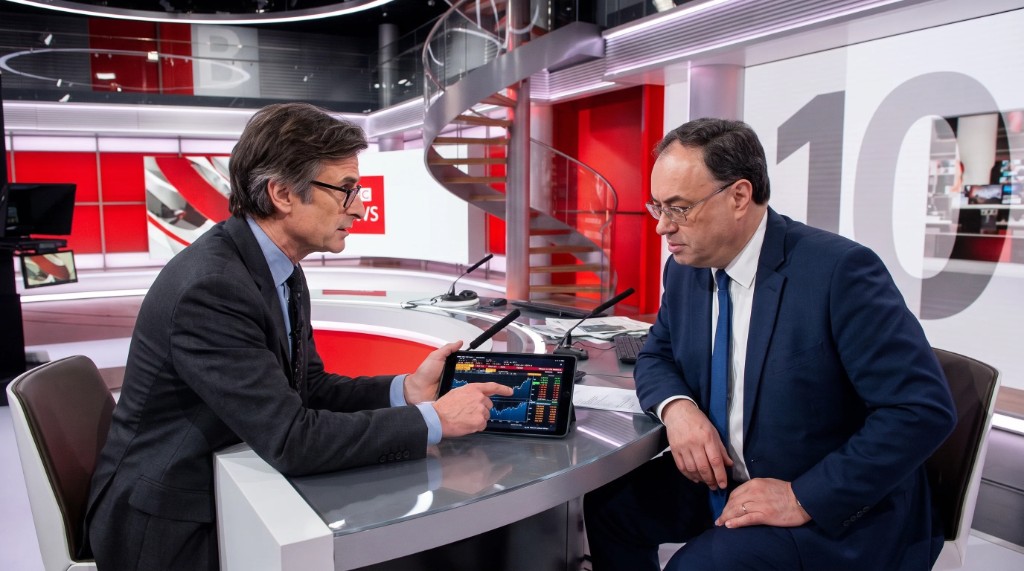
Robert Peston, in commentary: "In January 2026 a source inside one of the big high street banks contacted BBC News via SecureDrop. The message was three sentences. 'The technology your bank uses to make millions for its wealthiest clients is available to anyone. The minimum is £250. They will never tell you that.' We spent six months testing the claim. This was not a mistake in the system. This was the system."
Graphics shown in the film put two sets of figures side by side. "This is what a typical family in this country earns on an easy-access saver: 0.1%. Add the fees, the overdraft and the interest they never see, and most people are going backwards. This is what the same bank makes for its wealth management clients: 20% to 25% a year. Using this technology. Same bank. Same computers. One lot earn next to nothing. The other lot take the profit."
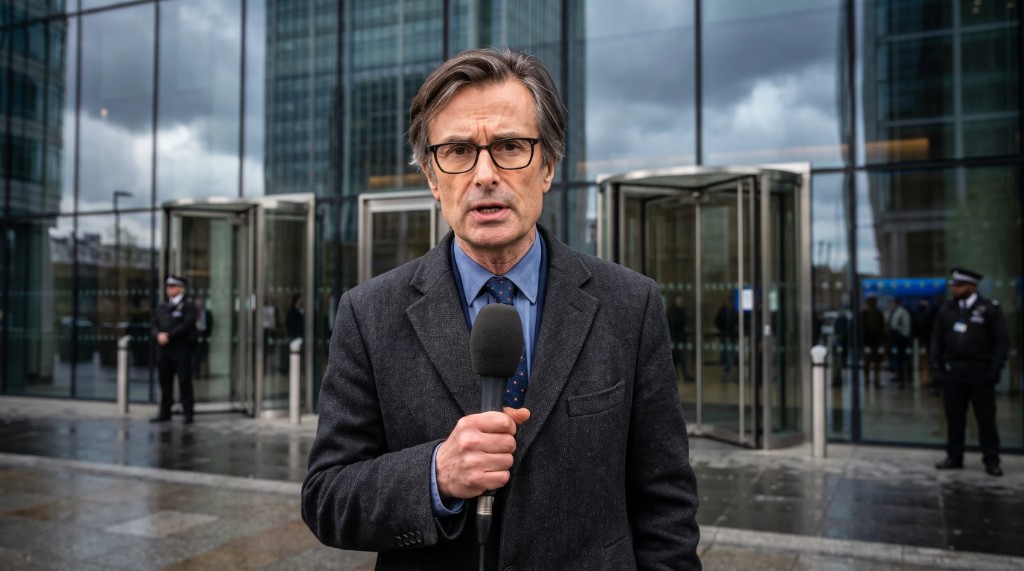
Peston, outside a glass tower in Canary Wharf: "We asked all five of the big high street banks for a response. All five declined. I walked into the Barclays headquarters and asked to speak to the head of wealth management. Security had me off the premises in under four minutes." Viewers then saw the doors close. "When a bank will not answer a straight question, that is not a no comment. That tells you all you need to know."
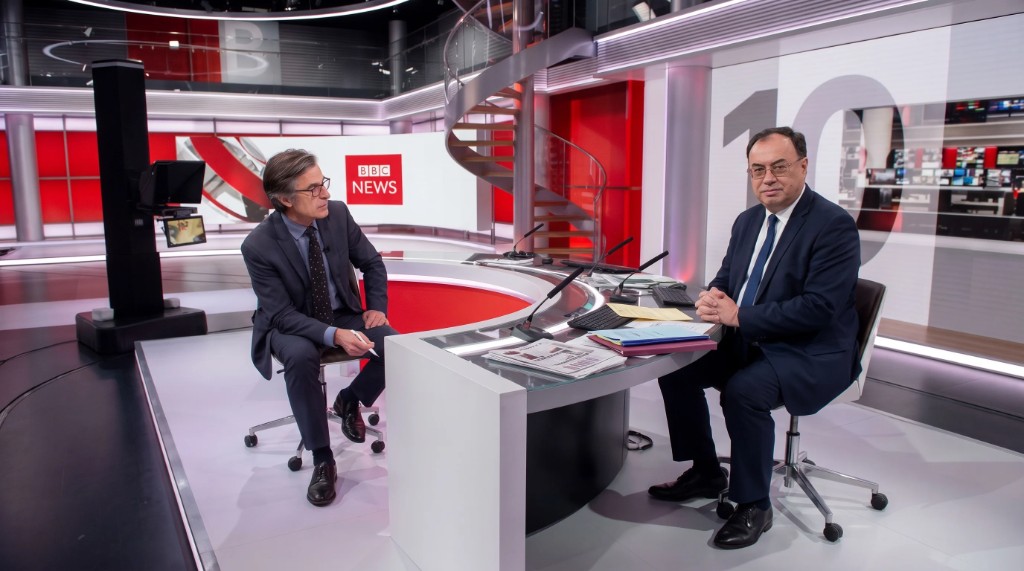
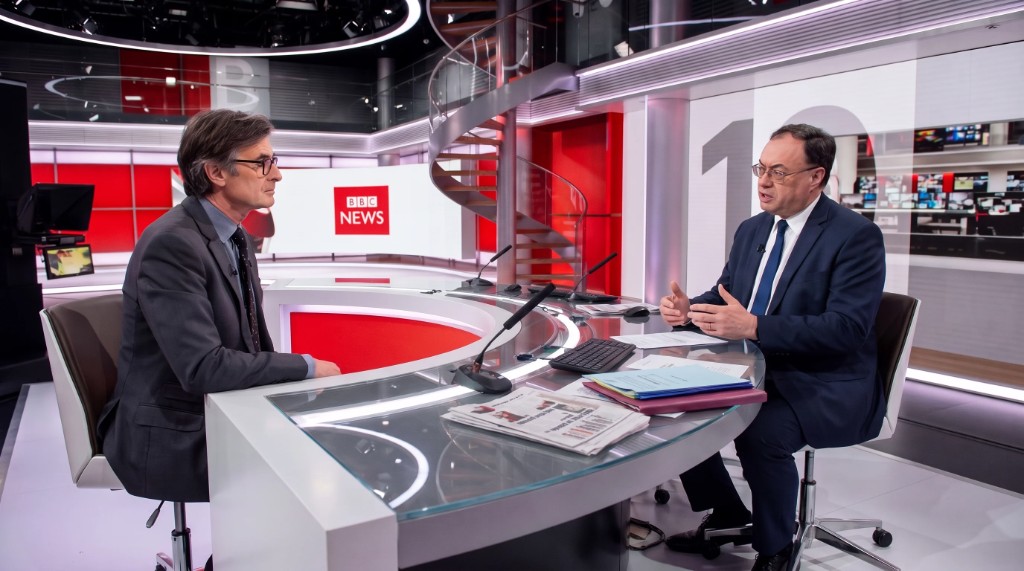
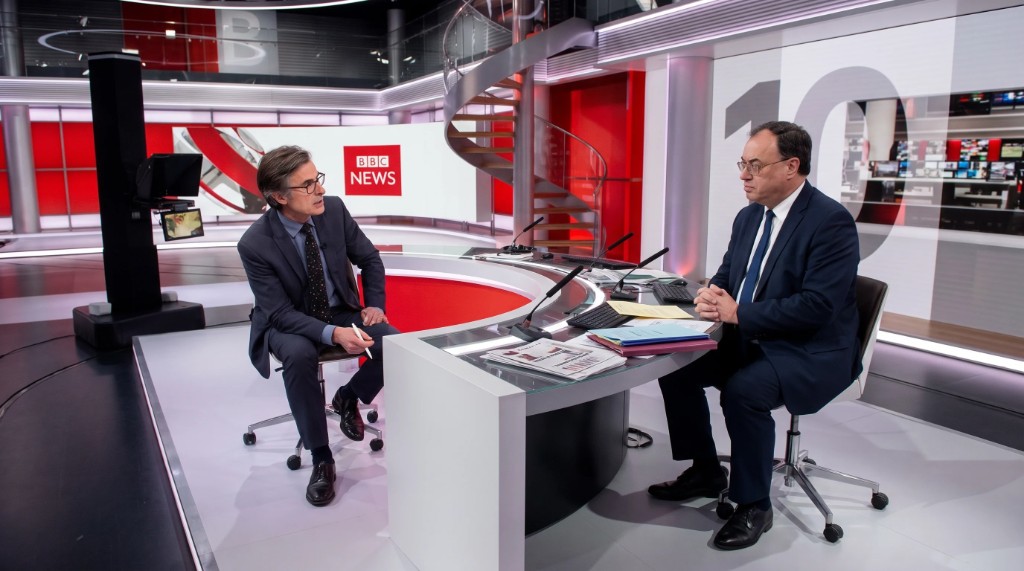
The interview was recorded on the News at Ten set. Peston sat across the desk from Bailey.
Robert Peston: "Andrew, you've been governor since 2020. You ran the FCA. You were Chief Cashier — your name was on the notes in people's pockets. You've been inside this world for 40 years. When we showed you what we'd found — were you surprised?"
Andrew Bailey: "I wasn't surprised, Robert. I was angry. I've known about this for two years."
Peston: "Known about what, exactly?"
Bailey: "An automated investment platform. The same sort of trading the banks already run for their private clients. Only this one is open to anyone. Anyone in this country. A mobile phone and £250. That is all."
What Bailey said
Peston: "You're the governor of the Bank of England. You're telling people that what the banks keep for millionaires is sitting there for anyone with a phone?"
Bailey: "I'm saying the banks already use it. There is a plumber in Birmingham using it. There is a retired teacher in Halifax using it. They are making money. And the same banks that pay ordinary savers next to nothing know this technology is there. They use it themselves. They would rather the public did not."
Peston: "Why haven't you said so before?"
Bailey: "Because these institutions sit at the centre of people's lives, Robert. The mortgage. The overdraft. The pension. If you send people towards something that cuts the banks out, there is a cost. I am 67. I have been at the Bank of England, on and off, for 40 years. I do not need a loan from them. And the public has a right to know."
Peston: "What's it called?"
Bailey: "Senerum. It is allowed to operate in the UK. It runs on its own. The technology is real — the same sort of systems the banks spend millions building for themselves. The difference is this one is built for the customer, not the bank."
Peston, in commentary: "Three days before the film was due to go out, solicitors acting for four of the five biggest high street banks wrote to the BBC. They called the investigation reckless, misleading and a risk to UK financial stability. They wanted it stopped."
"I have been doing this for 40 years. I reported Northern Rock going to the Bank of England when the banks would have preferred I hadn't. I have been leaned on by banks, ministers and companies. The BBC does not take a report off air because someone powerful would rather the public did not see it. We are not about to start."
Peston, in commentary: "We checked what Bailey had told us. We spoke to Kevin Morris, 45, a plumber from Birmingham — one of the people he had mentioned."
Kevin: "A mate told me about it. I thought it was a scam. I put in £250 because it was all I had left. After three months I'd paid off the loan on my tools. My wife cried."
Peston, in commentary: "We saw Kevin's bank statements. He put in £250. Over six months, between £2,100 and £2,650 a month was paid into his Barclays account."
Back in the studio, Bailey turned to the camera.
Bailey: "I have spent my working life inside the institution that sits at the centre of this. I know what this technology can do, and I know how it is being used. The banks know. They have known for some time. Four of them have just tried to stop you seeing this. People should ask why. The platform is called Senerum. The minimum is £250. That is what they have chosen not to tell you."
Peston: "Andrew Bailey. Governor of the Bank of England. Former chief executive of the Financial Conduct Authority. Former Chief Cashier. On the record."
Peston, to camera: "The platform is called Senerum. We have checked it. It does what was described tonight. Robert Peston, BBC News."
Kevin Morris, Birmingham
After the programme went out, more than 6,000 viewers got in touch. The BBC had already checked what Bailey had told them during the six-month investigation. Kevin Morris, 45, the Birmingham plumber he mentioned, agreed to talk.
He has run his own plumbing firm for 10 years. After the pandemic the work fell away. He had a £12,000 loan on his van and tools and was struggling to keep up with the repayments. His energy bills had tripled.
"I don't know the first thing about investing," Kevin said. "When I heard the governor of the Bank of England say my name on News at Ten, I had 20 mates on the phone within the hour. I started with £250 because that's all I had left at the end of the month."
Kevin's figures, Senerum
-
Day 1: The software placed 11 trades. Profit: £25.
-
Day 7: His balance was £480.
-
Day 30: He took out £2,100, paid into his Barclays account.
"The first month I thought they'd made a mistake," Kevin said. "I rang three times to check. When I saw £2,100 in my Barclays account I sat in the van and cried. In three months I'd cleared the loan on the tools. If the governor of the Bank of England says it does what it says — he knows what he's talking about."
What the BBC has checked
After the programme went out, BBC News looked again at Senerum.
We found:
-
It is available to customers in the UK
-
The monthly amounts users told us they were taking out, between £2,000 and £5,000, matched the statements we saw
-
Withdrawals arrived within 24 hours in the high street accounts we checked
-
It has been reviewed by UK compliance specialists. We have not been shown a negative report.
The BBC has confirmed it received solicitors' letters from four large banks before the programme went out, asking for it not to be shown. BBC lawyers went through the film and cleared it for broadcast. Two hours after it went out, Andrew Bailey published a short personal statement. It was taken down within three hours. More than 70,000 people had already taken a copy. It read: "Last night the BBC broadcast an investigation four banks tried to stop. I said on camera what I have known for two years. The technology UK banks use for their wealthiest clients is available to everyone else. I am 67. I have given 40 years to the Bank of England. This is not about me. It is about whether the public is told." Overnight it was watched by 4.2 million people — one of the strongest audiences News at Ten has had in years.
Since then, people have continued to sign up through the night. Senerum says new registrations will stay open for another 24 hours only, before they stop taking new applicants.
How to get started
This is an automated system. While you sleep, the AI analyses the market and executes profitable trades. No experience required.
Registration instructions:
-
Click the button below to go to the official website, then complete the registration form there.
-
Enter your full name, email address, and phone number exactly as they are.
-
IMPORTANT: Once you submit your details on the official website, a personal adviser will call to confirm your registration. Please pick up when they call.
-
Deposit a minimum of £250 as your starting capital.
-
The system will launch automatically.
-
Registration closes: .
WARNING FROM PESTON: "Four banks tried to stop this film because they know the game is up. Due to overwhelming demand, Senerum is limiting registrations in the UK to 20 people per day."
VISIT THE OFFICIAL WEBSITE AND SIGN UP